
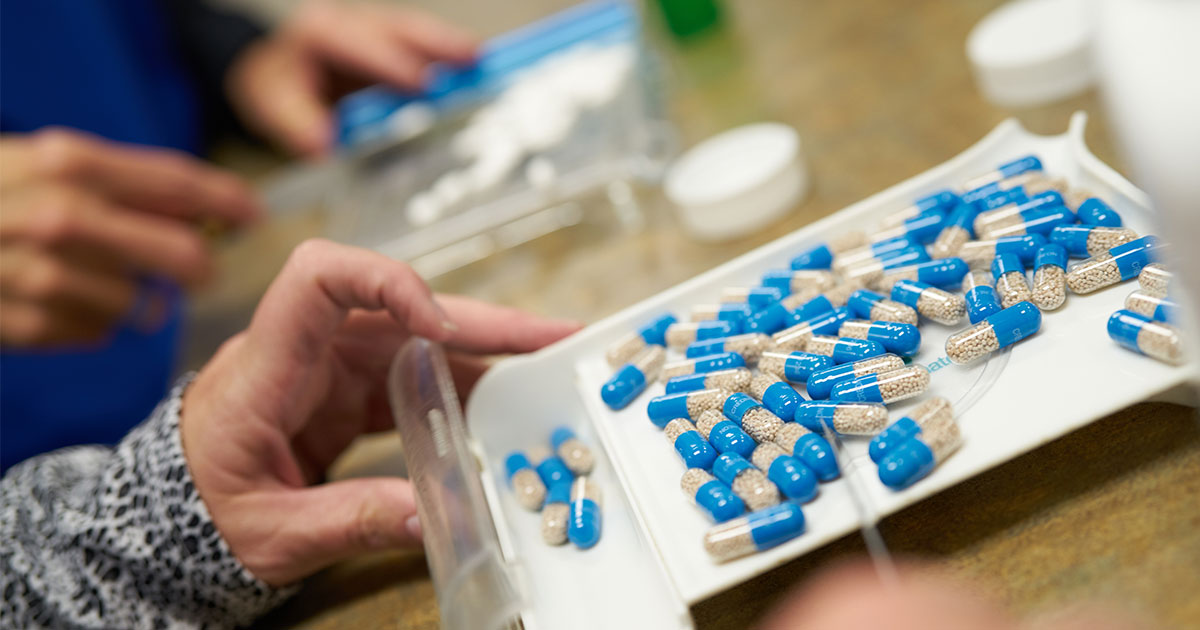
Most people think of chemotherapy as a medication given via an intravenous (IV) infusion into a vein. However, around 30 percent to 35 percent of new chemotherapy drugs are also available as oral medications, meaning they’re taken by mouth in the form of a pill or a liquid.
“Convenience is the biggest advantage of oral chemotherapy,” says Anthony Perre, MD, a board-certified Internal Medicine Specialist at City of Hope® Cancer Center Atlanta. “It also gives patients a greater sense of control and autonomy.”
This article covers the basics on oral chemotherapy as a treatment option for cancer, including:
- Which cancer types can be treated with oral chemotherapy?
- Who isn’t a candidate for this chemotherapy type?
- How often do you take chemotherapy pills?
- Are chemo pills as effective as IV chemotherapy?
- Advantages of chemotherapy pills
- Disadvantages of oral cancer medication
- Chemo pill side effects
- How much does oral chemotherapy cost?
- Questions to ask your doctor
If you or a loved one has been diagnosed with cancer and would like a second opinion, call us 24/7 at (877) 834-8941.
Which cancer types can be treated with oral chemotherapy?
Oral chemotherapy is a safe and effective way to treat certain types of cancer.
“For example, oral capecitabine has been shown to be effective at treating women with breast carcinoma, and there are also regimens to treat colorectal cancer that utilize this drug,” Dr. Perre explains.
The key to oral chemo’s effectiveness is that many of these medications use targeted agents—the “ingredients” in the chemotherapy that work to destroy or slow a tumor’s growth—that work best when taken by mouth.
Some of the most common cancer types treated using oral chemo include:
- Breast cancer
- Colorectal cancer
- Blood cancers (leukemia, lymphoma and myeloma)
- Small-cell lung cancer
Who isn’t a candidate for this chemotherapy type?
Oral chemotherapy may not be the best option for certain groups of patients, particularly those whose cancer or treatment regimen may cause nausea, vomiting or difficulty swallowing.
“Often, this is the case for patients who are receiving radiation therapy or have cancers of the head neck, esophagus or other gastrointestinal sites,” Dr. Perre says.
Patients who may struggle to remember to take their medication or might not take it correctly are another group that may be better suited to conventional chemotherapy.
“For doctors, it is very important to keep in mind compliance among patients taking oral medications,” Dr. Perre says. “Some patients with cognitive impairment may not be ideal for oral chemotherapy for that reason.”
Certain drug interactions may also mean a patient is not a candidate for oral chemotherapy. Cancer experts like Dr. Perre know what these interactions or risks are and discuss them with their patients before treatment begins.
How often do you take chemotherapy pills?
Many factors go into determining how often a patient takes an oral chemotherapy pill and for how long. These include:
- The type and stage of the patient’s cancer
- The patient’s overall health and goals for treatment
- Whether the patient is receiving any other medications or cancer treatments at the same time
In most cases, oral chemotherapy regimens are given in cycles—for example, the patient may take a pill every day for two weeks, then take no medication for a week, then repeat this cycle. Some oral chemotherapy drugs may also be taken every day with no breaks. The most important part to remember is that oral chemotherapy pills must be taken on time and exactly as prescribed to ensure they remain effective.
Are chemo pills as effective as IV chemotherapy?
“In many cases, oral chemotherapy can be as effective as intravenous chemotherapy,” says Dr. Perre.
Studies have even found that chemotherapy pills have the potential to work as well as IV chemo alternatives.
“Infused fluorouracil is a common intravenous chemotherapy used for gastrointestinal malignancies,” Dr. Perre adds. “Capecitabine, which is an oral chemo equivalent, has been shown to have as good survival and response rates.”
Advantages of chemotherapy pills
There are many advantages to taking chemotherapy pills rather than receiving. The biggest benefits are that it’s less disruptive for many patients and much more convenient.
“It limits the need for repeated venous access, and it can allow patients to spend more time at home,” Dr. Perre says. “It also means patients have less time lost with travel to and from a hospital or clinic.”
If a patient is taking oral chemotherapy pills daily, they may have fewer severe side effects, though these side effects are often more constant than those caused by conventional intravenous chemotherapy.
Disadvantages of oral cancer medication
The biggest disadvantage of oral chemotherapy is the need to ensure that patients take their medication on time and don’t miss a dose.
“Many oral chemo regimens involve complex dosing and timing of medication, which can be difficult for any patient,” Dr. Perre says, adding that this can be especially difficult for patients with cognitive health challenges or with medical conditions that require multiple oral drugs.
Another concern for some patients relates to handling chemotherapy pills. Because they are strong medications, some oral chemotherapies must be stored, handled or disposed of in a specific way. Doctors may also recommend that patients avoid allowing family members or loved ones to handle their medication.
Chemo pill side effects
Like conventional chemotherapy, oral chemo can cause a range of side effects. Which chemotherapy side effects patients experience can vary based on many factors, including their own health, what type of cancer they have and what kind of chemotherapy pill they’re taking.
“The most common side effects seen in patients who are taking oral chemotherapy are gastrointestinal or mucosal ones,” Dr. Perre explains. Common side effects of oral chemo include:
- Nausea and vomiting
- Diarrhea
- Anorexia
- Abdominal pain
- Oral stomatitis, an inflammation of the tissue lining of the mouth
- A rash or irritated skin on the hands or feet
“Fatigue is also the most common side effect experienced by patients receiving any kind of chemotherapy,” Dr. Perre says. Because oral chemotherapy is taken at home without a doctor or nurse present, he also advises that patients pay close attention to potential side effects and discuss them immediately with their care team.
How much does oral chemotherapy cost?
Oral chemotherapy medications may be expensive, costing anywhere from $10,000 to more than $25,000 per month. Insurance may cover part or all of this cost.
At City of Hope, patients often discuss the cost of oral chemotherapy during their consultations with their cancer care team. Specialty pharmacies also work closely with patients, their doctors and their insurance providers to determine whether these costs can be covered for patients who choose to receive chemotherapy this way.
Questions to ask your doctor
It’s important for patients to talk to their cancer care team and their loved ones about the pros and cons of oral chemotherapy for cancer. Some questions that may be useful to ask include:
- How long will I be on this drug?
- How often do I take it?
- What are the potential side effects?
- Are there options that can help reduce or manage side effects?
- How do I store it and use it safely?
- What if I forget to take it?
- Who do I call if I have a question?
If you or a loved one has been diagnosed with cancer and would like a second opinion, call us 24/7 at (877) 834-8941.